
Estimated reading time: 9 minutes
Quick Answer
Successful city landscape lighting and night tourism LED solutions are no longer just about visibility — they are powerful economic drivers that boost local tourism, extend visitor dwell time, and enhance public safety. To execute flawless urban nightscape design, municipalities and developers must specify permanent outdoor architectural lights with robust IP ratings. When evaluating IP66 vs IP67 outdoor lighting, remember that IP66 handles powerful water jets (ideal for exposed facades), while IP67 offers immersion protection (essential for ground-level or flood-prone installations). The ultimate goal is to balance breathtaking aesthetics with long-term durability and sustainability.
Introduction: The Economic Power of the Night
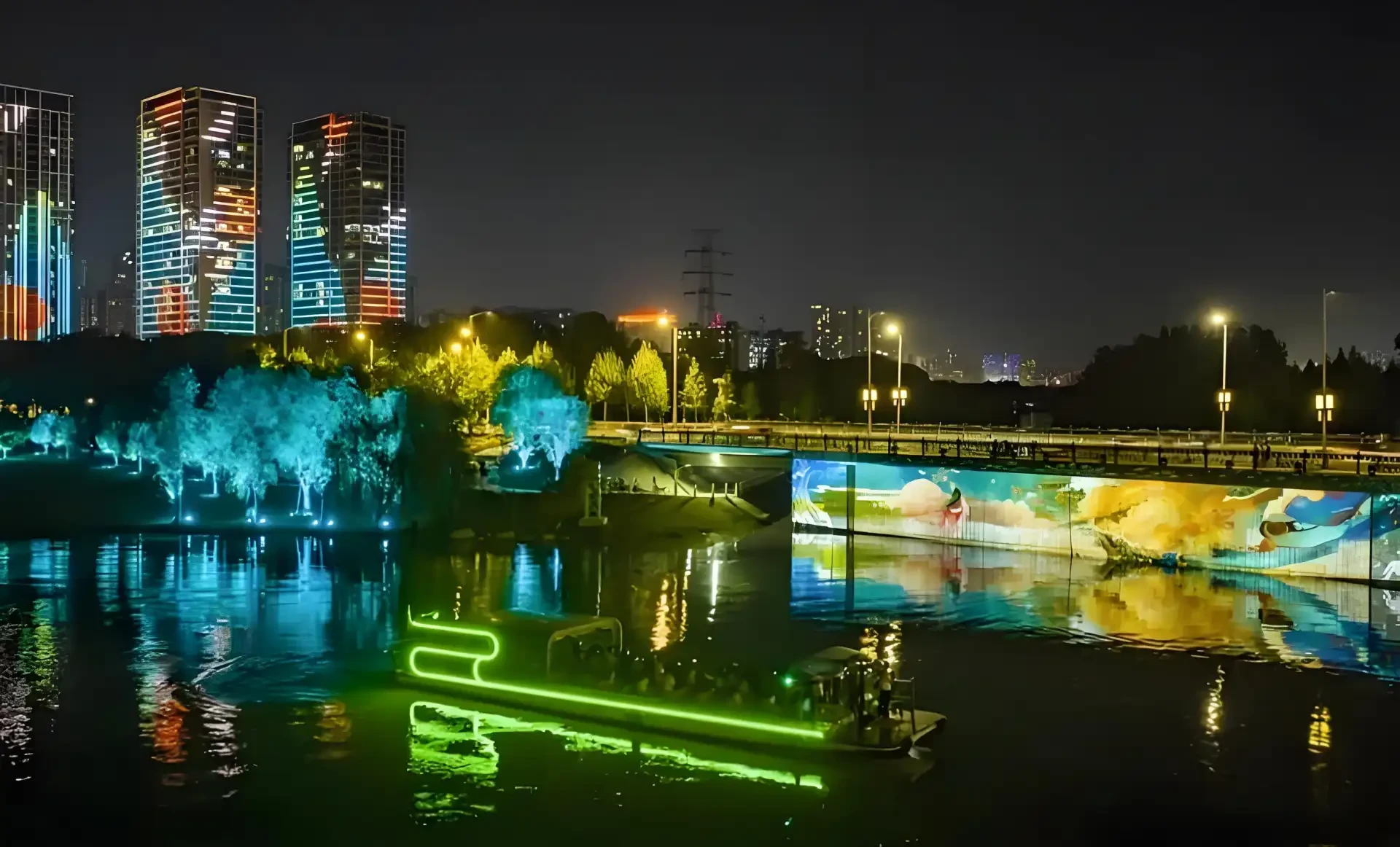
When the sun goes down, the city comes alive. Over the past decade, city landscape lighting has evolved from simple street illumination into a sophisticated tool for economic development. Cities around the world are investing heavily in night tourism LED solutions to create iconic nightscapes that attract visitors, stimulate nighttime economies, and build a strong cultural identity.
However, designing and executing a large-scale urban nightscape design is a complex engineering challenge. It requires balancing:
Artistic vision
Harsh environmental realities
Strict safety regulations
Long-term maintenance budgets
This ultimate guide walks you through the critical technical and strategic considerations for planning successful city landscape and night tourism lighting projects.
1. The Strategy: Designing for Night Tourism LED Solutions
A successful nightscape is not just a collection of pretty lights; it is an immersive experience.
Storytelling Through Light
Great night tourism LED solutions tell the story of the city. This means:
Illuminating historical landmarks to highlight their heritage
Using dynamic color temperatures to reflect local culture
Creating interactive light installations that engage visitors
Guiding the Visitor Journey
Lighting must act as a guide. By using higher illuminance levels along key pedestrian routes, bridges, and commercial zones, you can:
Direct the flow of tourists
Create natural "photo spots" that encourage social media sharing
Extending Dwell Time
The longer visitors stay in an area, the more they spend. A well-designed urban nightscape design incorporates:
Illuminated retail zones
Outdoor dining areas
Recreational parks
This effectively extends the "day" and boosts the local hospitality and retail economy.
2. The Architecture: City Landscape Lighting Design Principles
Lighting a city requires respecting its architecture and natural topography.
Highlighting Key Focal Points
Use high-output narrow-beam fixtures to illuminate towers, monuments, and bridges — making them iconic beacons at night.
Layering the Light
Avoid flat, uniform lighting. A professional city landscape lighting design uses a combination of:
Ambient wash lighting — for the background
Accent lighting — for architectural features
Focal lighting — for key pathways
This creates depth and visual interest.
Minimizing Light Pollution
Over-illumination ruins the night sky and disrupts local wildlife. Specify permanent outdoor architectural lights with:
Asymmetric optics
Full cut-off shields
Precise glare control
The goal is lighting that lands on the target surface — not in the sky or pedestrians' eyes.
3. Technical Deep Dive: IP66 vs IP67 Outdoor Lighting
This is the most critical specification decision for permanent outdoor architectural lights. Choosing the wrong IP rating can lead to catastrophic failures, expensive maintenance, and safety hazards.
The first digit (6) in both IP66 and IP67 means the fixture is completely dust-tight. The difference lies in the second digit:
Rating | Protection Level | Test Conditions | Best For |
|---|---|---|---|
IP66 | Powerful water jets | 12.5mm nozzle, 100 L/min, 100 kPa | Building facades, high poles, exposed structures |
IP67 | Temporary immersion | Up to 1m for 30 minutes | Ground-level, plazas, fountains, low-lying areas |
IP66 (Powerful Water Jets)
IP66 is the ideal standard for most city landscape lighting. It easily withstands:
Heavy rain
Typhoons
High-pressure street cleaning
Use IP66 for building facades, high poles, and exposed structures.
IP67 (Temporary Immersion)
IP67 is essential for ground-level installations. If you are installing:
Uplights in plazas
Recessed lights in low-lying areas
Fixtures near fountains and rivers
You must specify IP67.
Technical Tip: For coastal cities, ensure fixtures also have anti-corrosion properties (e.g., marine-grade die-cast aluminum). Salt spray is more damaging than fresh water.
4. Control and Sustainability: The Future of Urban Nightscape Design
As cities grow, the demand for smart, sustainable lighting is increasing.
Smart Control Systems
Modern night tourism LED solutions utilize advanced control protocols like:
DMX512
Art-Net
DALI
These allow for:
Dynamic light shows
Automated scheduling (e.g., dimming after 11 PM)
Remote monitoring
If a fixture fails or draws abnormal power, the control system alerts the maintenance team immediately.
Energy Efficiency
Always specify high-efficacy LEDs (e.g., >150 lm/W). While the initial cost may be higher, the long-term reduction in electricity consumption is massive, helping the city meet its carbon reduction goals.
Modularity for Maintenance
When specifying permanent outdoor architectural lights, look for fixtures with modular designs:
LED board replaceable independently
Driver replaceable independently
Optical lens replaceable independently
This drastically reduces the cost and time required for maintenance.
FAQ: City Landscape & Night Tourism Lighting
Can we use IP65 lights for ground-level installations in city parks?
It is not recommended. Ground-level fixtures are exposed to puddles, snowmelt, and heavy rain runoff. While IP65 protects against water jets, it cannot withstand immersion. For any fixture installed on or near the ground, always specify IP67 outdoor lighting for guaranteed protection.
How do we prevent light pollution when illuminating city landmarks?
The key is precise optical control. Specify fixtures with asymmetric lenses that direct light only onto the building's surface. Use full cut-off (FCO) fixtures and ensure light intensity is turned down during late-night hours using a centralized control system.
What is the lifespan of permanent outdoor architectural lights?
High-quality commercial LED fixtures typically have an L70 rating of 50,000 to 100,000 hours. This means after that time, the LED still produces 70% of its original brightness. Proper thermal management and anti-corrosion housing are critical to achieving this lifespan outdoors.
How does night tourism lighting boost the local economy?
By creating beautiful, safe, and engaging urban nightscapes, cities attract more visitors who:
Stay longer
Spend more on dining, entertainment, and accommodations
Share photos on social media, generating free promotion
Landmarks and light shows often become iconic destinations that draw tourists specifically for the nighttime experience.
What is the difference between IP66 and IP67 for city lighting?
IP66 protects against powerful water jets from any direction — ideal for exposed facades and high poles. IP67 protects against temporary immersion (up to 1 meter for 30 minutes) — essential for ground-level, recessed, or flood-prone installations.
Summary
Consideration | Recommendation |
|---|---|
Strategy | Storytelling, wayfinding, extending dwell time |
Design | Layered lighting, asymmetric optics, glare control |
IP Rating | IP66 for facades; IP67 for ground-level |
Control | DMX512, Art-Net, DALI for dynamic shows and scheduling |
Efficiency | >150 lm/W for energy savings |
Maintenance | Modular fixtures for independent component replacement |
Coastal | Marine-grade aluminum for salt spray resistance |
Related Reading
Need City Landscape or Night Tourism Lighting for Your Project?
We supply premium Outdoor Facade Lighting solutions — featuring durable permanent outdoor architectural lights (IP66/IP67) and advanced smart control systems designed for the world's most iconic city landscape lighting projects.
👉 Contact Us Today for samples, technical support, or a quote.